How to Motivate Kids to Do Chores: Points, Praise and Rewards
How to motivate kids to do chores: make the job clear, praise the effort, add small points, and stop being the reminder. Includes scripts.
By Famiyo Editorial Team5 min read
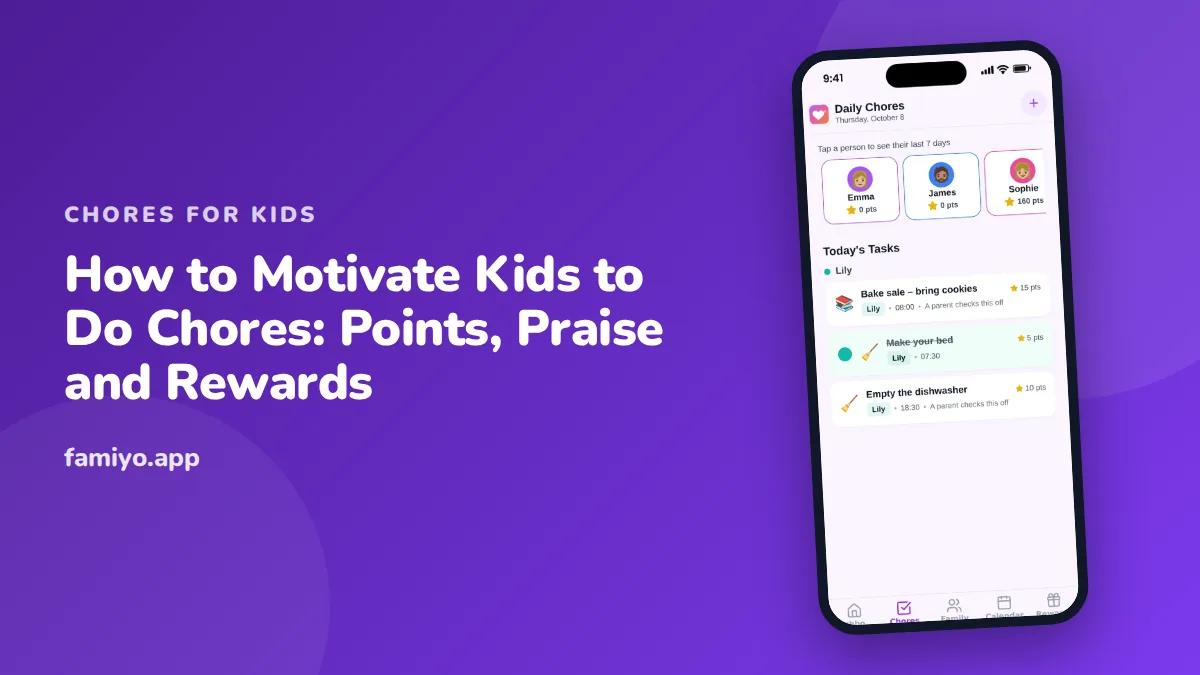
Wednesday, 6:40 p.m. The dishwasher is full of clean plates, the backpack is in the hallway, and your 9-year-old has discovered something urgent in the other room. You have asked three times. This page is about getting past asking three times: what actually moves kids, in the order it works, with words you can use tonight.
Why asking louder doesn't work
Nagging fails for a boring reason. It makes you the owner of the chore. Every reminder tells your child that remembering is your job, so they stop trying to remember. Add a rising voice and the chore becomes a fight about tone, not about dishes.
Kids are motivated by four things, and chores usually offer none of them: a task they can picture finishing, a sense that they are good at it, a say in how it goes, and something that happens when it is done. Build those four back in and most of the resistance fades. Not all of it. Kids will still groan, and that's fine. Groaning while doing it counts.
Make the job small and visible first
Before you add any reward, check the job itself. "Clean your room" is a 40-minute mystery. "Clothes in the hamper, books on the shelf, bed pulled up" is a 10-minute list with an end.
Match the load to the age. Two or three daily tasks for preschoolers, three or four for school-age kids, and one bigger weekly job from age 8. If you are not sure what fits, our guide on how to teach kids to do chores step by step shows how to demonstrate a task so the child knows what done looks like.
Then give a choice wherever you honestly can. "Dishes or trash tonight, you pick" gets more cooperation than "do the dishes," because the child gets to decide something.
Praise that works (and praise that backfires)
Praise is free and it works, but only if it is specific. "Good job" slides off. "You got the corners of the counter, nobody usually does that" tells a child exactly what to repeat.
A few rules:
- Praise what they did, not who they are. "You stuck with it even though it was boring" lands better than "You're such a good helper."
- Say it soon, within a few minutes of finishing.
- Keep it low-key with older kids. A nod and "thanks, that helped" beats a performance in front of friends.
- Never attach praise to a request for more. "Nice work, now do the bathroom too" teaches kids to finish slowly.
If you want a fuller picture of what helpfulness looks like at different ages, see how to teach kids to be helpful at home.
When to add points and rewards
Praise carries a lot of kids. Others need something more tangible, especially for repetitive jobs. That is where points come in. A point is a small, immediate "yes, that counted" that adds up to something the child chose.
A simple setup, using sizes most families find workable:
| Task size | Example | Points |
|---|---|---|
| Small (2 to 5 minutes) | Make the bed, feed the pet | 5 |
| Medium (10 to 15 minutes) | Empty the dishwasher, tidy the room | 10 |
| Big (30 minutes or more) | Clean the bathroom, mow the lawn | 20 |
| Bonus | Done without a reminder | +2 |
The bonus matters more than it looks. It pays the child for the exact thing you want, which is not needing you.
Now the other half, the rewards, and how fast they arrive:
| Reward size | Examples | Price |
|---|---|---|
| Small | 15 extra minutes of screen time, choose dessert | 30 to 50 points |
| Medium | Pick the family movie, stay up 30 minutes later | 100 points |
| Big | A day out, a toy around $20 | 300 to 500 points |
Aim for a child to afford a small reward every 2 to 3 days and a big one every 3 to 4 weeks. Too slow and kids lose interest. Too fast and the rewards stop meaning anything. If you want a few more formats beyond points, there are plenty in our reward chart ideas.
What to say, word for word
Scripts feel silly until you need one. Try these.
- The setup, said once and calmly: "Your jobs today are the dishwasher and the trash. They're done before screens."
- The check-in, one time only: "How's the dishwasher going?"
- The finish: "Looks good. That's 10 points, plus 2 for not needing a reminder."
- When they push back: "I hear you, you'd rather not. It still needs doing before screens."
Notice what is missing. No lecture, no sarcasm, no third reminder. If the job isn't done, the consequence is simply that the next thing doesn't start yet. Say it flat, like reading a bus schedule.
If your child flatly refuses, that is a different problem with its own steps, covered in what to do when your child refuses to do chores.
What to do when the shine wears off
Around week three, most systems stall. The points feel old, the chart looks boring, and you are back to nagging. This is predictable, not a failure.
Rotate the rewards so the menu stays interesting. Let the child add one. Raise the standard slightly: the bed now has to include pillows. Take a break from the points for a week and watch what the child does without them; some tasks will have become habit, and those can quietly leave the system.
Fade rewards on the easy jobs first. Keep the points for new or disliked ones. The long-term goal is a child who does the dishes because that is what happens after dinner, and for that the habit matters more than the prize.
Letting the app do the reminding
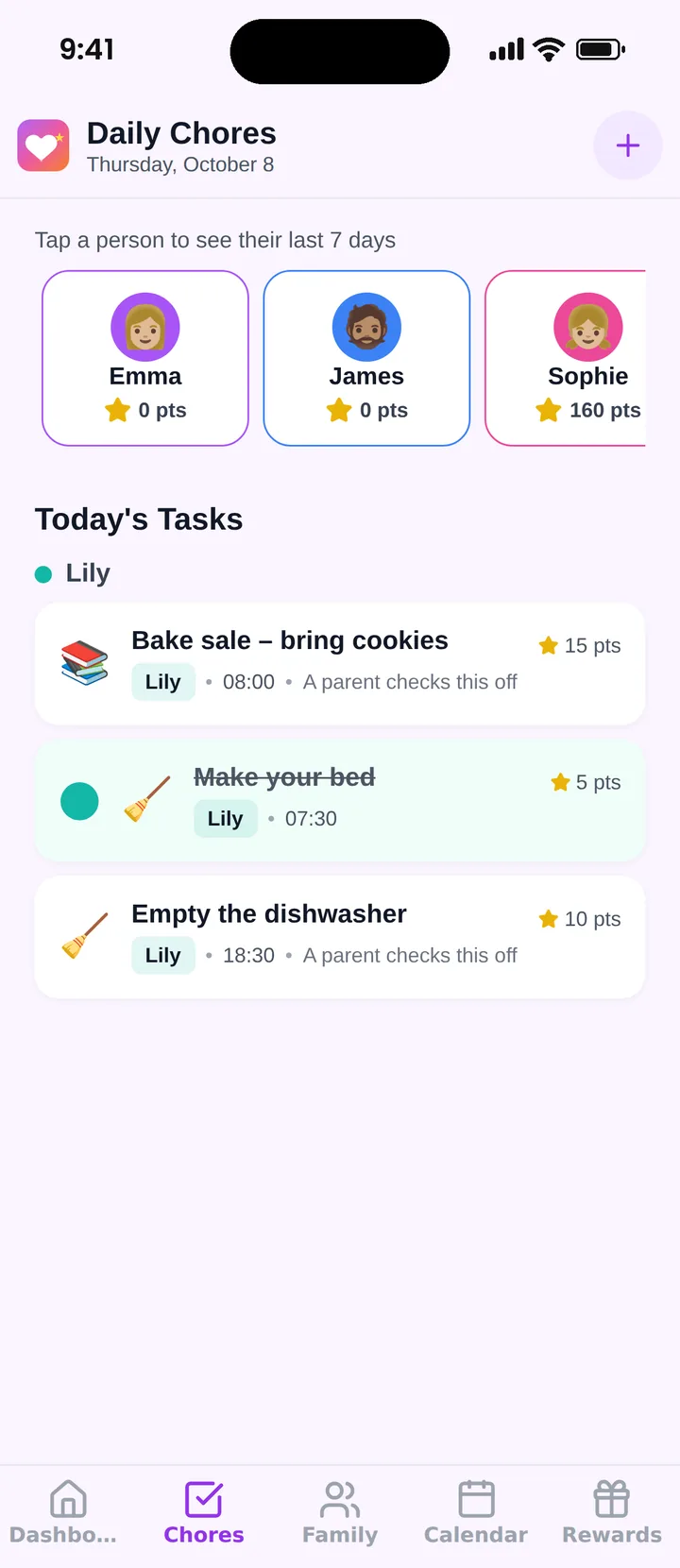
Famiyo is a free family app for iPhone and Android that combines a shared family calendar, chores with points and a rewards shop; kids join with a code, no email needed.
For motivation, the useful part is that the reminder comes from the app instead of from you. Set a chore to repeat, give it points, and the child hears about it by push notification and sees their own list and points on their own phone. You choose whether they check tasks off themselves or you approve them, and you get a notification when something is done. See our list of the best chore apps for kids if you are comparing options.
Whatever tool you use, the test is the same. If you went away for a weekend, would the chores still get done? Aim for that.
Frequently asked questions
Should I reward kids for doing chores?
Small rewards work well for building the habit, especially points that add up to something the child picked. Keep them modest, pair them with specific praise, and fade them as the chore becomes routine. Daily basics like dishes can stay unpaid while extras earn more.
What if my child only does chores for the reward?
That is normal at first. Keep the praise specific, make rewards less frequent over time, and ask your child to notice how the room feels afterward. Many kids start the job on their own once it is part of the daily rhythm.
How many chores is too many for a kid?
Two or three daily tasks for preschoolers and three or four for school-age kids is a sensible start. If every day turns into a standoff, cut the list in half for two weeks and build back up slowly.
Why does my child do chores for the babysitter but not for me?
Kids often follow rules more easily from someone with a fresh, neutral tone. The fix is to copy what the sitter does: say the task once, say what happens after, and walk away instead of re-arguing it.
Try Famiyo With Your Family
Chores with points, a rewards shop for kids and one shared family calendar. Set it up in a couple of minutes.



Free to download • No credit card required • Available on iOS & Android