How to Teach Kids to Be Helpful at Home
How to teach kids to be helpful at home: let toddlers join in, name what you see, ask for help in small pieces, and stop rewarding every single act.
By Famiyo Editorial Team4 min read
You ask your 7-year-old to carry one grocery bag and get a sigh the size of a minivan. Meanwhile the neighbor's kid holds doors open for strangers. Helpfulness isn't a personality trait that some children are born with. It's a habit that grows when kids are needed, thanked and trusted with real work. This page covers how to build it, what to say, and what to skip.
Start by saying yes to the small, slow help
The window opens early. A 2-year-old who wants to help you wipe the table is not trying to be efficient. They want to belong to what you're doing. If you say "no, I'll do it" often enough, they quit offering, and at age 8 you'll wonder where the helper went.
So let them do the job badly. Give the toddler a damp cloth. Let the 4-year-old stir the pancake batter and spill some. Accept the crooked bed, the half-folded towel, the dishwasher with three spoons in the wrong slot. You can quietly fix it later, out of sight. Re-doing a job in front of a child tells them their help wasn't wanted.
This costs you minutes at the beginning. It pays back for years.
Name what you see
"Good job" is pleasant and almost useless. Kids learn which behavior to repeat when you describe it.
| Instead of | Try |
|---|---|
| "Good boy" | "You noticed Dad's hands were full and opened the door. That helped him." |
| "Thanks, sweetie" | "You cleared everyone's plates, not just yours. That saved me a trip." |
| "Great job!" | "You put the shoes in a line by the door. Now nobody trips." |
| "Finally!" | "You started without me asking. I noticed." |
Notice what each of the good lines has in common: it says what the child did and what happened because of it. No gushing needed. A flat, warm "that helped" lands better with a 10-year-old than a party.
Ask for help in pieces a child can say yes to
"Help me with the house" is a request nobody can picture. "Can you carry these two bags to the kitchen?" is a request with a start and a finish.
Some patterns that work across ages:
- Ask for one clear action with an end point: "Put the forks on the table."
- Give a reason that points to people, not rules: "Grandma is coming at 5 and I'd like the living room clear."
- Offer a choice between two jobs: "Sweep or wipe the table?"
- Say thanks once, afterward, in a normal voice.
- Ask again tomorrow. And the day after.
Skip the lecture about how hard you work. Kids tune it out, and it turns helping into paying off a debt.
What helpful looks like at each age
The same urge looks different as kids grow. Match your asks to what they can do, and see our chores for 5-year-olds for a longer list at that age.
| Age | Helpful things they can do | Time |
|---|---|---|
| 2-3 | Put toys in a bin, carry a light bag, wipe a spill, help feed a pet | 5 to 10 minutes |
| 4-5 | Set and clear their place, water plants, match socks, carry in groceries | 10 to 15 minutes |
| 6-9 | Pack their bag, empty the dishwasher, help a younger sibling, sweep | 15 to 30 minutes |
| 10+ | Cook a simple meal with you nearby, change sheets, spot what needs doing without a prompt | 30 minutes |
If your toddler is at the "I do it myself" stage with toys, the tricks in how to get a 3-year-old to clean up toys are a good place to start.
Be careful with rewards for helping
Rewards are fine for regular jobs. Making the bed, feeding the dog and emptying the dishwasher are things you can attach points to, and a child who earns a little for them is learning that effort has results.
Spontaneous kindness is different. When your daughter carries her grandfather's coat without being told, thank her and leave it there. If every kind act comes with a prize, the lesson drifts from "people need help" to "what do I get?"
A simple split works for many families: a short list of daily jobs that earn points, and everything else (holding a door, helping a sibling, noticing a mess) earns thanks and nothing more. Kids can tell the difference.
When helpfulness stalls
It will. Some weeks the helper disappears and the sighs return. Before you decide your child has become selfish, check the usual suspects: the jobs may be too many, too vague, or too big. A child who is tired, hungry or stuck on a screen at 5 pm will say no to anything.
Keep your voice level, repeat the ask once, and follow through on whatever you said would happen. For a child who flatly refuses, what to do when your child refuses to do chores covers the calm response step by step. For teaching the actual skills behind a job, see how to teach kids to do chores step by step.
Letting an app do the reminding
Most nagging comes from one thing: you are the only reminder in the house. Moving that job elsewhere helps.
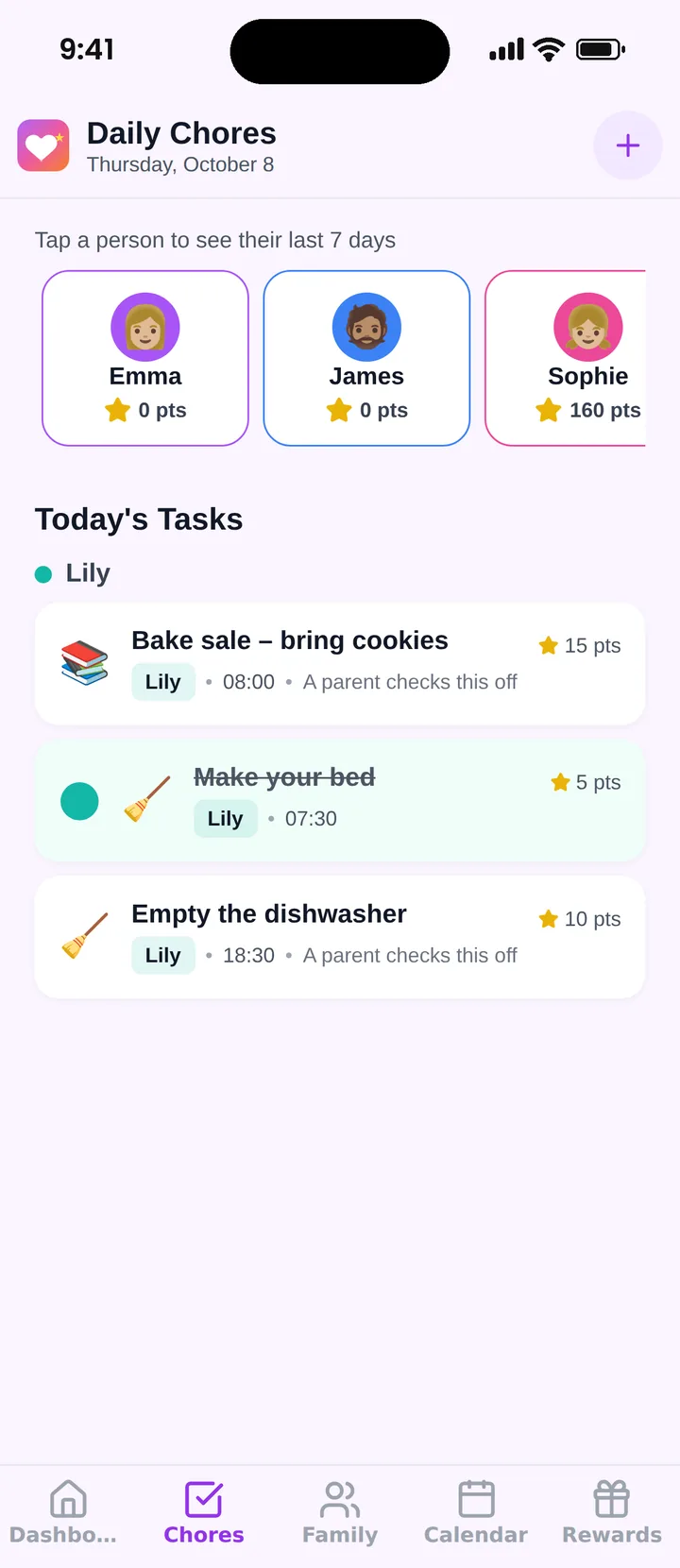
Famiyo is a free family app for iPhone and Android that combines a shared family calendar, chores with points and a rewards shop; kids join with a code, no email needed. Each child sees their own tasks on their own phone and gets a push notification when you add a new one, so the prompt comes from the app instead of from you. Kids check off their own tasks, or you can approve them first. You hear when a chore is done. A bonus of 2 points for finishing without a reminder rewards the child who starts alone. See our list of the best chore apps for kids if you're comparing options.
One thing to try this week
Pick one moment each day, such as when you walk in from the car, and ask for one specific bit of help. Thank them once, in plain words. Do it for two weeks before you judge.
Frequently asked questions
At what age do kids start being helpful?
Many toddlers start offering help around age 2, carrying a spoon or pulling a sock out of the dryer. That urge is real, but it fades if adults keep saying no because it's faster to do it themselves. Say yes while the wish is still there.
Should I reward my child every time they help?
No. Pay attention and thanks are enough for spontaneous help. Save points or rewards for regular jobs you have agreed on. If every kind act earns a prize, kids start asking what they get before they lift a finger.
How do I get my child to help without being asked?
Make the need visible and the job small. Narrate what you are doing, point out who needs help, and thank them when they notice. Regular jobs on a list also help, because a child who knows the routine has fewer reasons to wait for an order.
What if my child only helps when there is something in it for them?
That's common when help has always come with a prize. Move rewards to the set jobs, thank spontaneous help warmly without a prize, and ask for favors in the family voice: we all live here, so we all pitch in.
Try Famiyo With Your Family
Chores with points, a rewards shop for kids and one shared family calendar. Set it up in a couple of minutes.



Free to download • No credit card required • Available on iOS & Android