How to Motivate a Teenager Who Hates School: 7 Steps That Help
Find out why your teen hates school, then rebuild motivation in seven steps: rule out problems, give back control, shrink the work and reward effort.
By Famiyo Editorial Team4 min read
"I hate school" can mean a dozen different things. It can mean a boring history class, a group of kids who've turned on them, a reading problem nobody caught, or a tired brain that's been running on six hours of sleep since October. Motivation tricks bounce off all of those until you know which one you're dealing with. This is a seven-step sequence: figure out the cause first, then rebuild the habit.
Why teenagers lose interest in school
Teen motivation is not a character flaw. A few ordinary things stack up around this age: schoolwork gets harder and more abstract, friends matter more than adults, the adolescent body wants to sleep later than school wants to start, and kids start to compare themselves with each other. Motivation researchers often describe three needs behind engagement: some control over what you do, a feeling of being capable, and a sense of belonging. When school takes away one or more of these, interest drops. That gives you something to look for.
Seven steps, in order
- Rule out the serious causes. Before any reward system, ask whether something is wrong: bullying, anxiety, low mood, a learning difficulty, trouble with a particular teacher, or a medical issue. If the change was sudden, or your teen describes dread, panic or physical symptoms before school, talk to the school counselor and the pediatrician. A reward chart is not the right tool for these, and we can't diagnose anything from a page.
- Have one real conversation. Pick a time that isn't right after a bad report. Ask "What's the worst part of the day?" and then be quiet. Resist fixing it in the first ten minutes. Teens who feel heard tend to bring more details the second time.
- Check sleep and routine. The AAP and the American Academy of Sleep Medicine recommend 8 to 10 hours per 24 hours for ages 13 to 18, and screens off about an hour before bed. A teen who is chronically short on sleep will hate everything that starts at 7:30 am.
- Give back control. Let them choose what they can: when homework happens, where they study, which subject to start with, which elective to pick next term. Control over small things makes the big thing, attendance, easier to hold firm on.
- Shrink the work. "Do better in school" is too big. Turn it into something they can finish tonight: 25 minutes on the math sheet, one paragraph of the essay, one email to the teacher about the missing assignment.
- Reward effort, not grades. Grades depend on things your teen can't fully control. Effort is visible and within reach: starting homework by 5 pm, attending every day this week, handing in one late assignment. Keep rewards small and immediate, like screen time, a later weekend curfew or picking the family dinner.
- Connect it to their own goals. Not yours. Ask what they'd like to be doing in two years and find the thread to school, even if it's thin: a game design interest needs math, a part-time job needs a reference.
What to say, and what to skip
| Instead of | Try |
|---|---|
| "You're just lazy." | "I can tell this is hard right now. What's the part that's worst?" |
| "Do you want to fail?" | "What would make tomorrow 10% better?" |
| "When I was your age..." | "What would you change about how your day starts?" |
| "No phone until your grades are up." | "If the math sheet is done by 6, phone time starts at 6:30." |
| "You have to go, period." | "You have to go. Let's work out what's making it hard." |
Notice the last pair. Attending isn't optional, and saying so calmly is part of the job. But a firm expectation paired with curiosity works better than one on its own.
Where rewards help and where they don't
Rewards are a short-term bridge. Used well, they help a teen get moving on days when nothing inside them is pushing. Used badly, they teach a teen that school is a favor they do for you. To keep rewards in the helpful zone:
- Tie them to specific, small behaviors: "homework started by 5:30," not "be motivated."
- Let your teen help choose the rewards. A reward that doesn't interest them won't move them.
- Keep the first targets easy so they win in the first week.
- Fade them out as the habit sets in. After two or three weeks of consistent use, raise the bar or swap the reward for something larger.
Our guide to motivating a teenager who doesn't care covers the broader picture, and the main article on how to motivate a teenager goes into the underlying ideas. If studying itself is the sticking point, see how to motivate kids to study. For a teen with ADHD, strategies change a bit, so read how to motivate a teenager with ADHD and talk to their doctor or therapist.
Doing this with a rewards shop
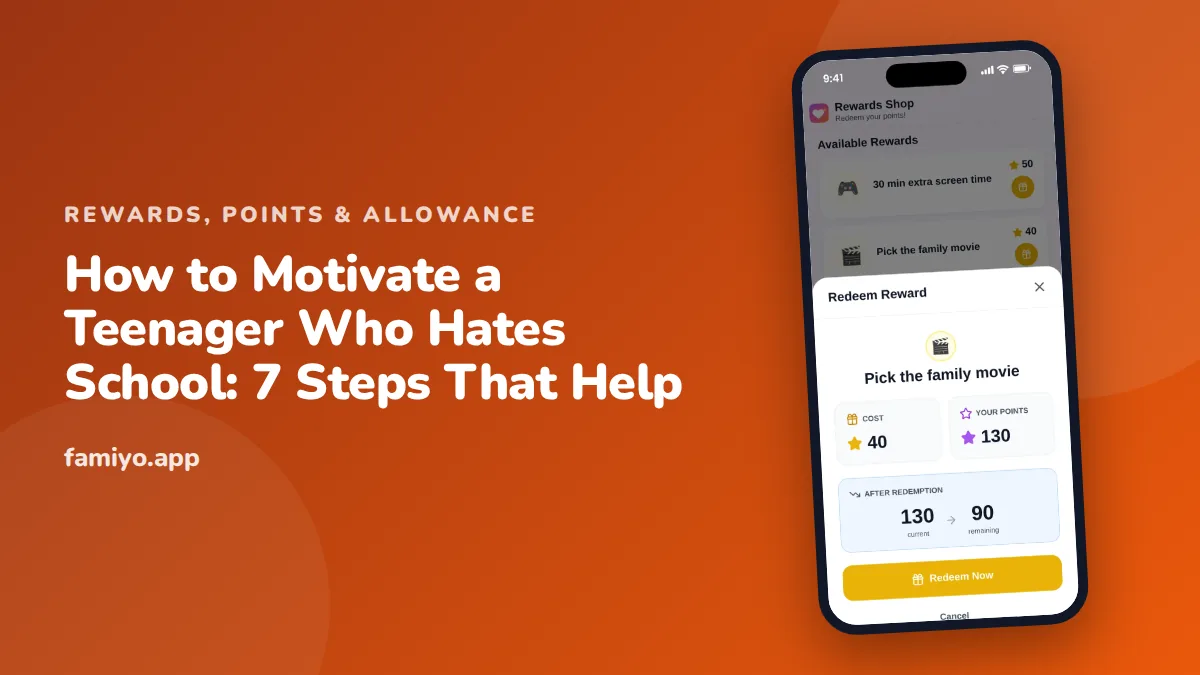
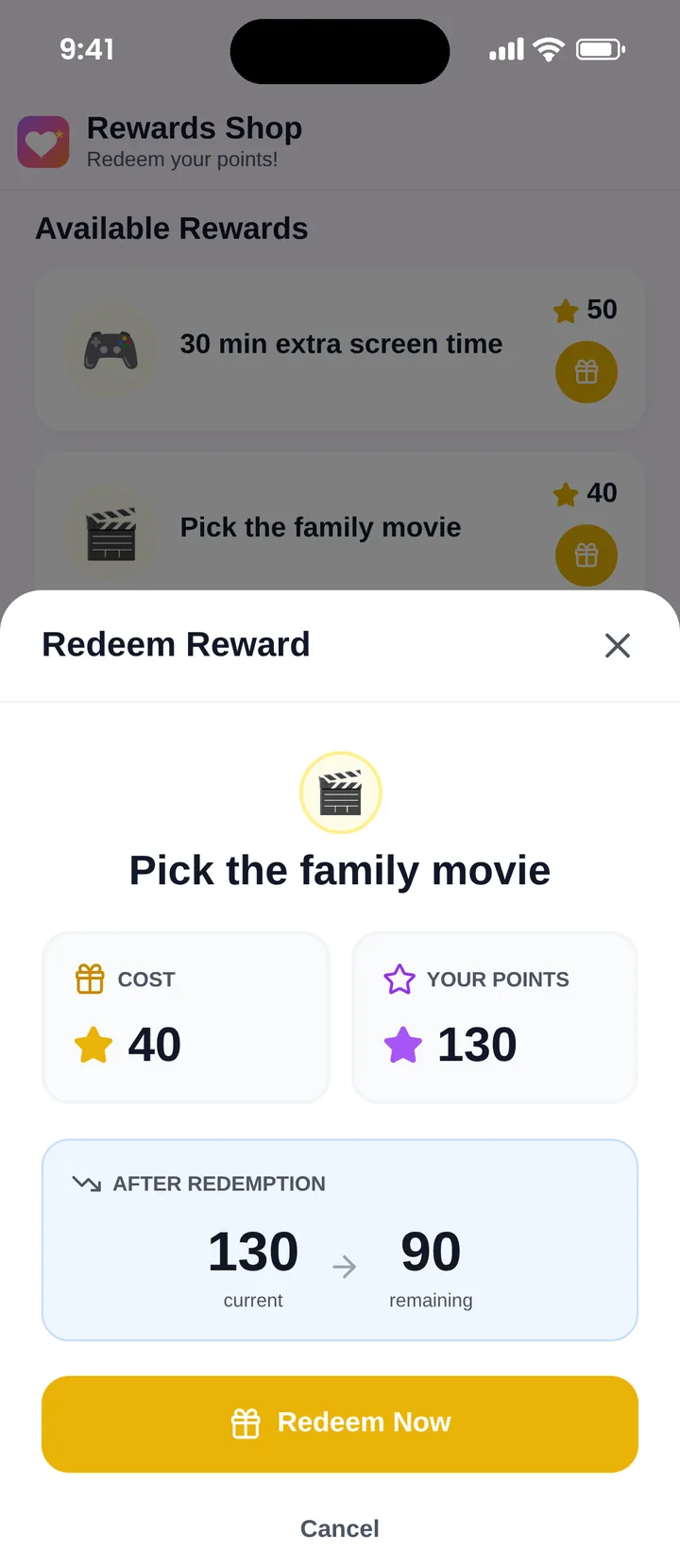
Famiyo is a free family app for iPhone and Android that combines a shared family calendar, chores with points and a rewards shop; kids join with a code, no email needed. You can add a school task such as "Start homework by 5:30" or "Hand in the missing assignment" and give it points. In the rewards shop, you create rewards with a price in points, how many are available and when, and your teen redeems from their own phone and sees how many points they will have left. A teen who picks the rewards is more likely to care about them. We compare the options in our list of the best reward chart apps for kids.
One thing to do this week
Pick step 2. Find 20 minutes this weekend, ask what the worst part of the school day is, and write down the answer without arguing with it. The rest of the plan depends on what you learn.
Frequently asked questions
Why does my teenager suddenly hate school?
A sudden change often has a cause: bullying, a falling-out with friends, a hard class, anxiety, low mood or lost sleep. Ask open questions, check with the school, and see the pediatrician if the change lasts more than a couple of weeks.
Should I punish a teen who refuses to go to school?
Punishment rarely fixes the cause and can make avoidance worse. Set a calm, firm expectation to attend, find out what is driving the refusal, and bring in the school counselor early rather than waiting for it to escalate.
Do rewards work for teenagers who hate school?
Small rewards can help a teen start, especially for effort such as finishing homework or attending every day. They work best alongside real choices and conversation, and when the goals are within reach this week, not by June.
How much sleep does a teenager need for school?
The American Academy of Pediatrics and the AASM recommend 8 to 10 hours per 24 hours for ages 13 to 18. Many teens who hate mornings are simply short on sleep, so fixing bedtime is often the cheapest first step.
Try Famiyo With Your Family
Chores with points, a rewards shop for kids and one shared family calendar. Set it up in a couple of minutes.



Free to download • No credit card required • Available on iOS & Android