Chore Bingo for Kids: Free Printable Card and Rules
Free chore bingo for kids: a printable 5x5 card with 24 everyday jobs, simple rules, prize ideas and ways to adapt the game for different ages.
By Famiyo Editorial Team4 min read
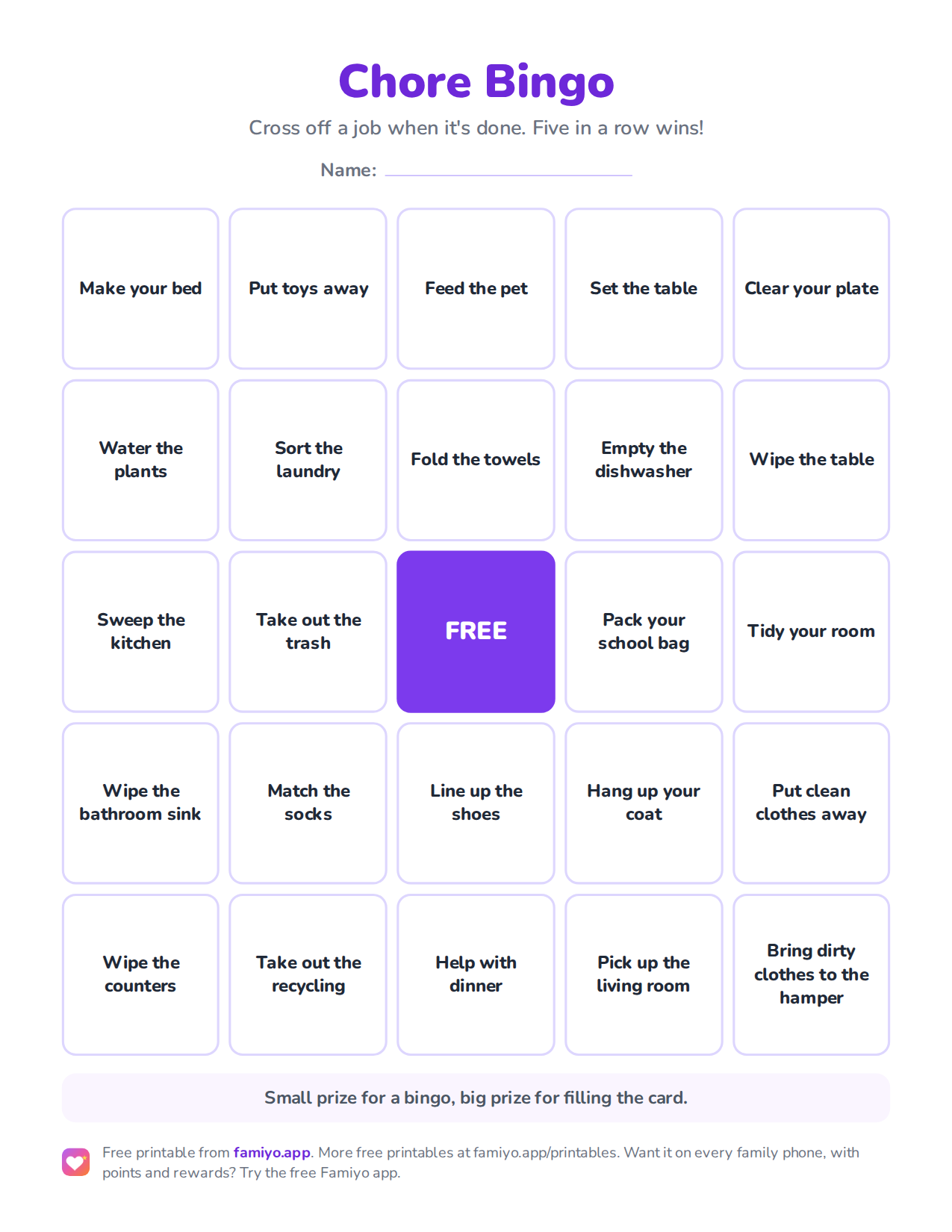
Free printable
Chore Bingo
A bingo card on one US Letter page. Download the PDF to print it, or save the image to use it on a tablet or in a document.
Free for home, classroom and nonprofit use, see the license. More free printables.
A chore chart is a promise to repeat the same thing every day. Bingo breaks that rule on purpose. The squares are in random order, the finish line moves, and kids pick which job to do next, which helps when a plain list stops working. Below you'll find a ready 24-square card, the rules, ways to adapt it for different ages, and notes on when bingo isn't the right tool.
The printable chore bingo card
The printable below has 24 everyday jobs for kids around 5 to 10 and a free space in the middle. Print one per child. The squares are short so a child who is just starting to read can follow them, and they mix quick wins such as making the bed with a few that take longer, like sweeping the kitchen. You can edit them before printing if some don't fit your home.
If you'd like the jobs on cut-out pieces instead, see chore cards for kids.
How to play, step by step
- Print a card for each child and put it where they'll see it, such as the fridge or their bedroom door.
- Explain that a square counts when the job is finished properly. Decide what "properly" means for each, for example "bed made means blanket up and pillow on top."
- Let kids choose the order. Any job can be done on any day, and you can limit it to one square a day if you want to spread things out.
- When a job is done, the child crosses it off or colors the square. A parent glances at it first for kids under 8.
- Five in a row, across, down or diagonal, is a bingo. Pay out a small prize right away.
- Keep going for a blackout (every square) and give a larger prize for it.
- After one to two weeks, print a new card with different squares.
Rules that keep it fair
Bingo works only if every square is something the child can really do alone. A few house rules help:
- Cross off each square once per round, even if the job is repeated.
- Mix easy and hard squares so a bingo takes real effort but is within reach.
- No squares your child can't do safely alone. Swap out anything that involves a stove or sharp knife for a younger child.
- Don't take back crossed-off squares because of a bad attitude. Handle behavior separately.
- Keep a few essential jobs off the card, like feeding a pet. Those still happen daily, bingo or not.
Prizes that fit
Pick prizes before the game starts and write them at the bottom of the card, so kids know what they're aiming at.
| Level | When | Prize ideas |
|---|---|---|
| Small | First bingo | Choose dessert, 15 extra minutes of screen time, pick the music in the car |
| Medium | Second bingo or a double line | Pick the family movie, stay up 30 minutes later |
| Big | Blackout (all 24 squares) | A day out, a small toy around $20 |
Aim for kids to reach a bingo in about a week. If it takes much longer, the card has too many hard squares.
Adapting the card to different ages
| Age | Adjust it like this |
|---|---|
| 4-5 | Use a 3 by 3 grid with pictures. Read the squares aloud and help with each job. |
| 6-7 | The full card works. Keep squares to 5 or 10 minutes. See chores for 6-year-olds for ideas that fit. |
| 8-10 | Add harder squares: load the dishwasher, vacuum a room, take out the trash. |
| Siblings | Give each child their own card, with age-fitting squares, and a shared family prize. |
For a household with several jobs and children, a household chores list for families can help you decide which squares to include.
When bingo isn't enough
Bingo is a motivator, not a system. It's good for livening up a slump or kicking off the summer, but it can't replace a steady routine. Daily jobs that must happen, like feeding a pet or packing a school bag, belong on a regular chart or schedule. A bingo card will also run out of steam after a few rounds, which is normal. Use it in bursts, then return to your regular plan.
Replacing the paper with Famiyo
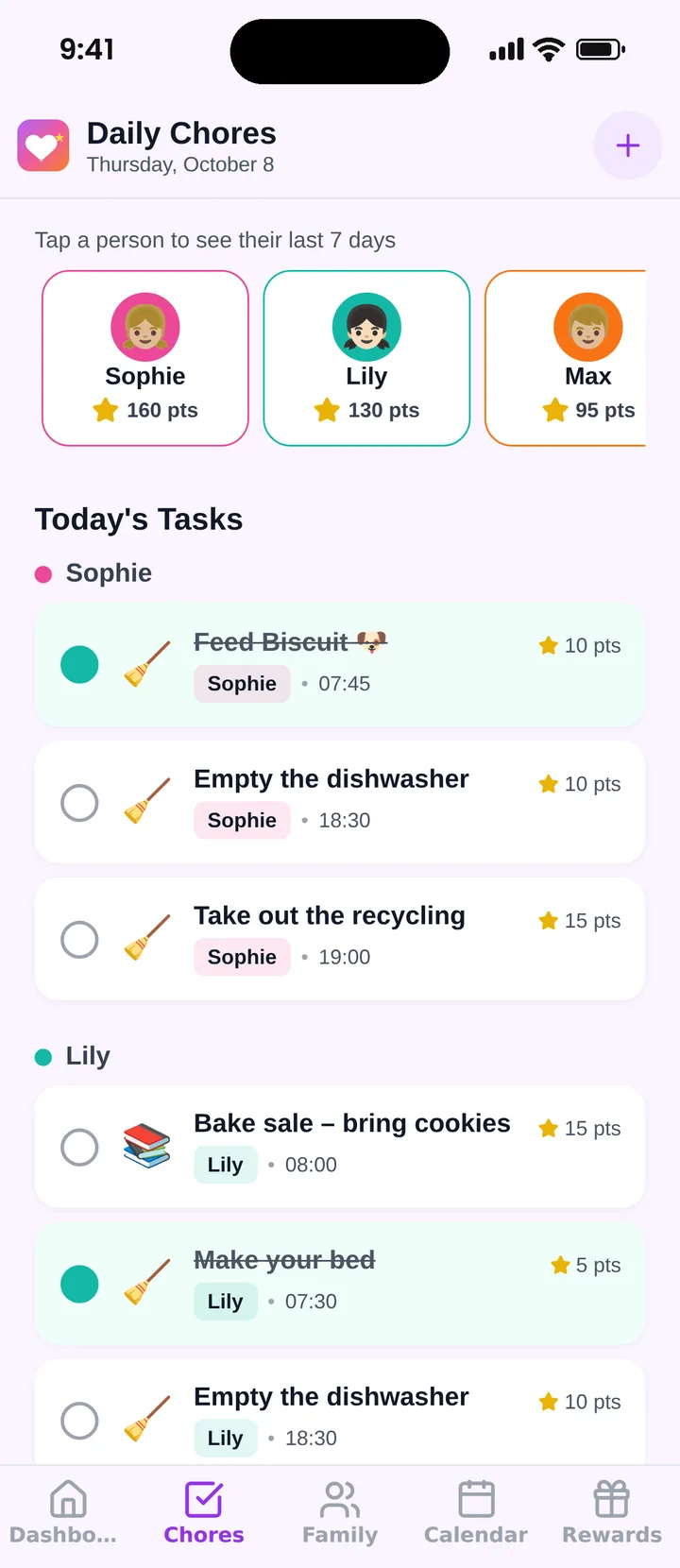
Famiyo is a free family app for iPhone and Android that combines a shared family calendar, chores with points and a rewards shop; kids join with a code, no email needed. If you like the bingo idea but not the paper that gets lost behind the couch, Famiyo can carry the same jobs. You add each chore once and set it to repeat daily, weekly or every few days. Every child sees their own list on their own phone, earns points for each job and hears a notification when a new task arrives. Parents get a notification when a chore is done, and everything syncs live between phones. The rewards shop holds the prizes. Our guide to the best chore chart apps compares your options.
Start with one card this weekend
Print the card, pick two prizes, and let your child choose the first square. Check back after the first week to see how many they've crossed off and whether any squares need swapping.
Frequently asked questions
What ages is chore bingo good for?
Mostly ages 5 to 10. Younger kids need a parent to read the squares and keep the card short. Older kids can handle harder squares. Teens usually find it babyish, so for them a plain list or points system fits better.
How long should a game of chore bingo last?
One to two weeks is about right. Shorter and kids don't reach a bingo; longer and the novelty wears off. Start a fresh card with new squares each round so the game stays interesting.
What should the prize be for chore bingo?
Something small and quick: choosing dinner, picking the movie, 15 extra minutes of screen time, or a trip to the park. Offer a bigger prize for filling the whole card, and agree on prizes before the game starts.
Do siblings play chore bingo together or separately?
Separate cards work best, so each child can finish at their own pace. For two kids you can also use one shared card and let them race for lines, but a gap in age or ability can make that unfair.
Try Famiyo With Your Family
Chores with points, a rewards shop for kids and one shared family calendar. Set it up in a couple of minutes.



Free to download • No credit card required • Available on iOS & Android