Chore Chart for Kids With ADHD: Free Printable and Setup
A free printable chore chart for kids with ADHD, built on short steps, visible progress and quick rewards, plus how to set it up so it lasts past week two.
By Famiyo Editorial Team4 min read
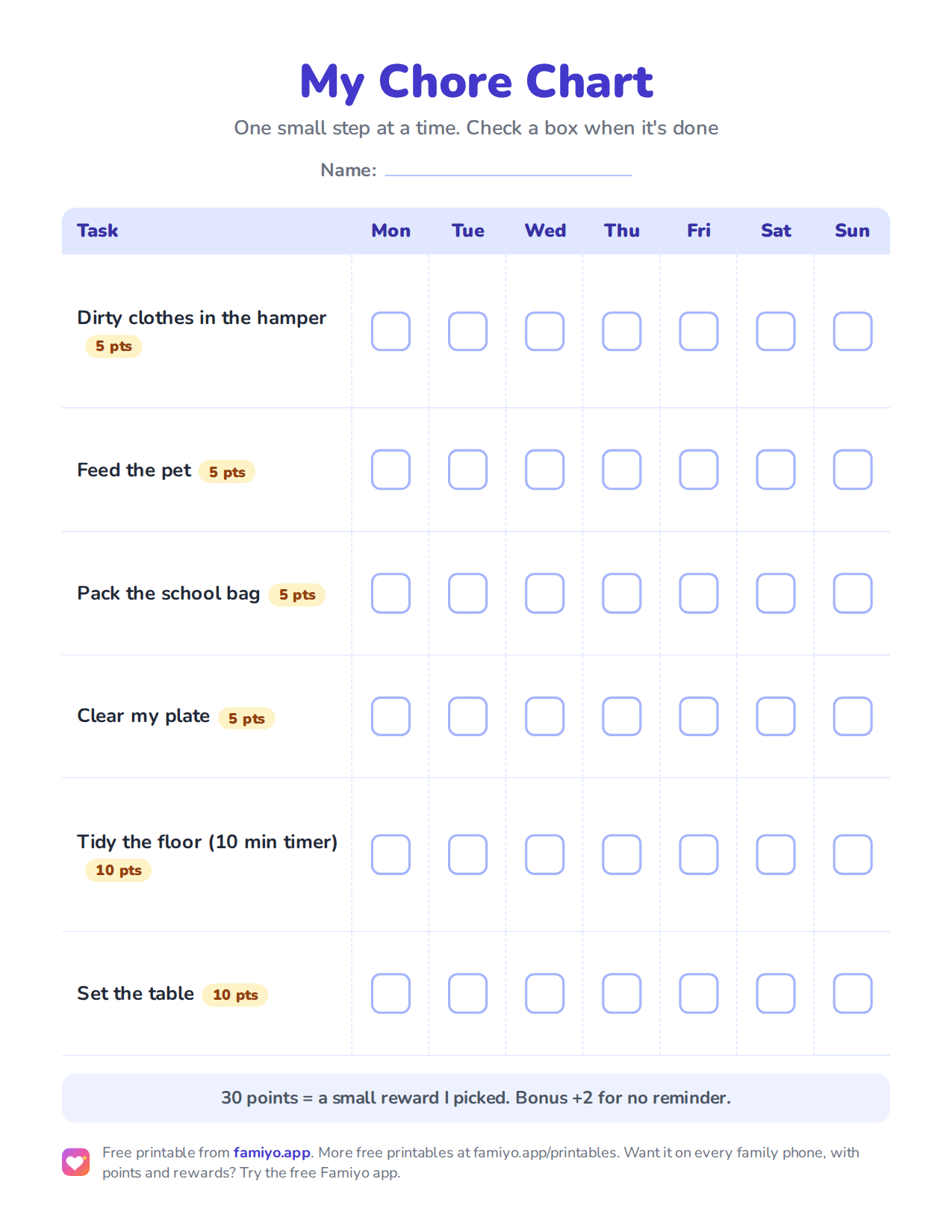
Free printable
My Chore Chart
A weekly chart on one US Letter page. Download the PDF to print it, or save the image to use it on a tablet or in a document.
Free for home, classroom and nonprofit use, see the license. More free printables.
You make a beautiful chart, your child loves it for four days, and then it sits on the fridge unread. That pattern is common with kids who have ADHD, and it usually points to the design of the chart rather than the child. Below is a simple structure, a sample week and a free printable you can use tonight.
What makes a chore chart work for ADHD
Kids with ADHD often have trouble starting tasks, holding several steps in mind and waiting for a distant reward. A good chart takes pressure off those three points.
- Few tasks. Three or four a day is plenty.
- One action per line. "Clean your room" is a project. "Put dirty clothes in the hamper" is a step.
- Visible. Put the chart at eye level near where the task happens, not buried in a drawer.
- Fast feedback. A check mark, a sticker or points right after the task, not at the end of the week.
- Predictable timing. Tie each chore to something already in the day, like after breakfast or before screens.
This is practical guidance, not treatment. If chores are a constant battle, your child's pediatrician or therapist can help you adjust the plan to your child.
A sample week
Here is a starter chart for a school-age child. Points follow the standard sizes: 5 for a small task, 10 for a medium one, and a +2 bonus for finishing without a reminder.
| Task | When | Points |
|---|---|---|
| Put dirty clothes in the hamper | After getting dressed | 5 |
| Feed the pet | Right after breakfast | 5 |
| Pack the school bag | Before dinner | 5 |
| Clear your own plate | After dinner | 5 |
| Tidy the bedroom floor (10 minutes, timer on) | Before screens | 10 |
| Set the table (weekends or alternate days) | 15 minutes before dinner | 10 |
A child who finishes four small tasks earns 20 points a day. At the usual pricing, 30 to 50 points buys a small reward such as 15 extra minutes of screen time, so they can win something every two or three days. That pace matters: a prize that is a month away will not hold a young child's attention.
How to set it up
- Choose three tasks your child can already do. Success first.
- Write each as a single action, with a picture if your child is younger.
- Attach each to a time or cue in the routine.
- Decide the reward menu together, and let your child choose from it.
- Show the chart once, do the first week alongside them, and fade your help slowly.
- Review after two to three weeks, as with any new routine. Swap tasks that are too easy or too hard.
Things that help it stick
Use a timer for tasks that can drift, like tidying. Ten minutes with a visible countdown is easier to start than "until it's clean." Pair chores with music if your child likes it.
Keep your own words short. "Hamper, then breakfast" works better than a paragraph. And praise the action, not the personality: "You remembered the bag without me asking" beats "good boy."
Break a bigger job into a short sequence only when your child is ready. "Tidy the floor" can become three lines: books on the shelf, clothes in the hamper, toys in the bin. Each gets its own check, so the child feels progress every minute instead of waiting for the end. Keep the chart in one place so the habit of looking becomes automatic.
When a day goes wrong, skip the lecture and start again the next morning. A chart should never become a place where mistakes pile up. Do not remove points already earned.
If you need task ideas beyond this list, see chores for kids with ADHD by age, and for tone at home, how to get kids to do chores without yelling.
Printable ADHD chore chart
The printable below is a weekly chart with six tasks and a point value for each, so your child can check a box for every day. It suits ages 6 to 12 and can be taped to a bedroom door or the fridge. Cross out what doesn't apply, and write your own reward at the bottom.
Replacing the paper chart with Famiyo
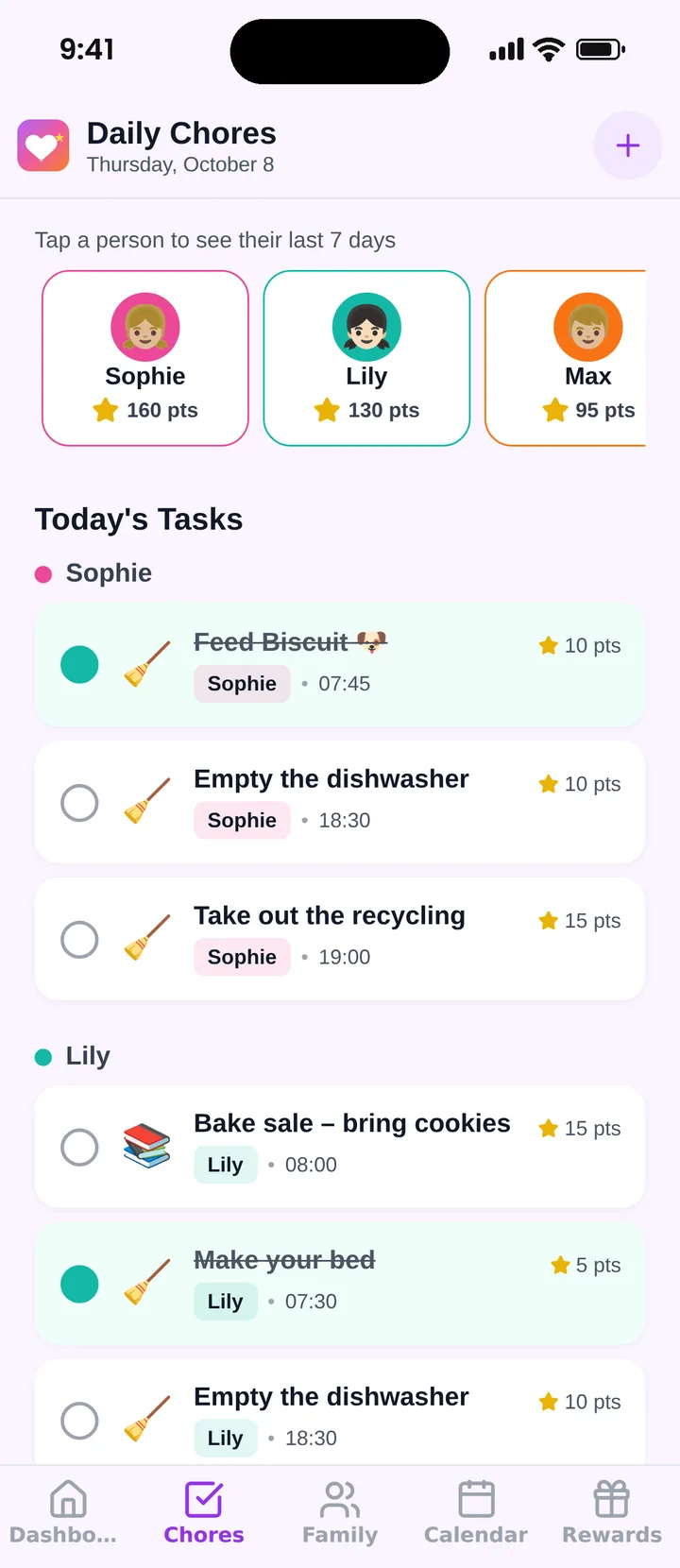
Famiyo is a free family app for iPhone and Android that combines a shared family calendar, chores with points and a rewards shop; kids join with a code, no email needed. For a child with ADHD, the useful parts are repeating chores that appear every day without you rewriting the chart, points awarded as soon as a task is checked off, and push notifications that tell your child about a new task. Your child's phone and yours stay in sync, and you decide whether they check off tasks themselves or you approve them. The free plan includes 1 repeating task, and Premium removes the limit.
If you want to see other options, our list of the best chore chart apps compares them.
Frequently asked questions
How many chores should be on a chart for a child with ADHD?
Start with 3 or 4 tasks a day, and fewer if that feels like too much. Each task should be one clear action, such as 'put dirty clothes in the hamper'. You can add one task at a time once the routine feels automatic.
Why do chore charts stop working for kids with ADHD?
Novelty fades, and rewards that come days later feel far away. Rotate stickers or rewards, keep feedback immediate, and review the chart every couple of weeks so it stays interesting and the tasks still fit.
Should I use rewards with an ADHD chore chart?
Many families find small, immediate rewards help, since delayed payoffs are hard for many kids with ADHD. Use points that add up to a reward your child chose. Your child's pediatrician or therapist can advise on what suits your child.
Is a paper chart or an app better for ADHD?
Either can work. Paper is visible and tactile, while an app can remind your child and update points instantly. Choose the one your child will actually look at, and switch if interest drops.
Try Famiyo With Your Family
Chores with points, a rewards shop for kids and one shared family calendar. Set it up in a couple of minutes.



Free to download • No credit card required • Available on iOS & Android